
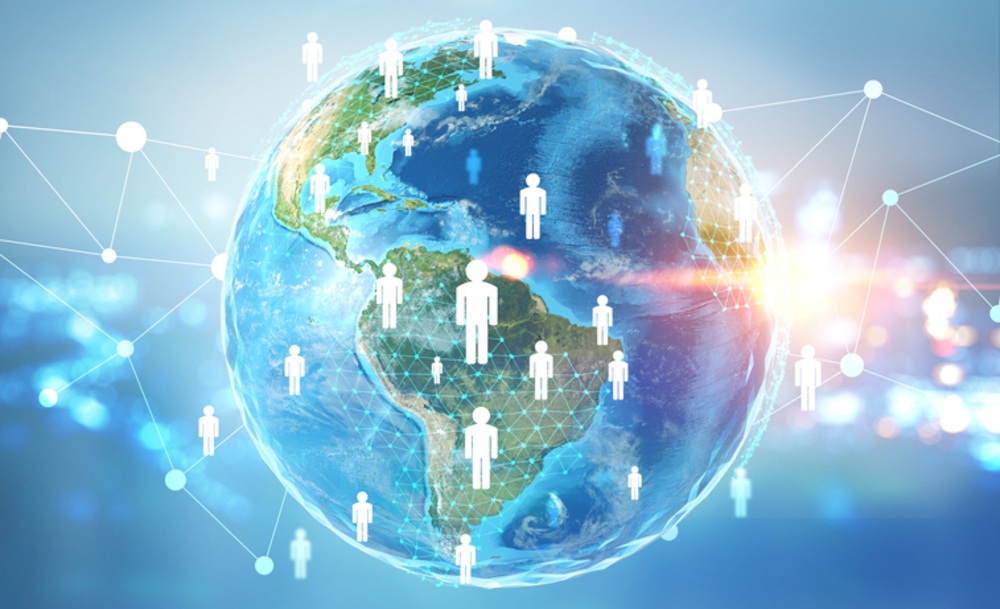
Resource Allocation in a Fragmented World
The pursuit of a fair world, where everyone has what they need to thrive, often feels like chasing a mirage. We talk about “global resource equity,” a mouthful of a phrase that simply means getting natural, financial, and technological resources to everyone, everywhere, in a way that fuels growth, sparks ingenuity, and builds a sense of fairness for all.
It’s about building a stable world, a place where economic security isn’t just a dream. This isn’t some pie-in-the-sky ideal; it’s a deeply practical challenge with real-world consequences for every one of us.
This article is based on deep research by Alexis AI and the human team at PreEmpt.Life. All reports are fully available to download free-of-charge. Just click on the link above.
The Unbalanced Scales: Past and Present Realities
Look closely, and you’ll see the deep lines of history etched into our current resource landscape. Today’s challenges didn’t just appear out of nowhere; they are tangled in “path dependencies, structural inequities, and historical legacies”. The uneven starting lines, coupled with wildly different abilities to adapt, mean that value and power are scattered unevenly across the globe. Meanwhile, everything is speeding up; our economies, technologies, and environment are changing at a dizzying pace, creating both new dangers and exciting possibilities that twist and turn in unpredictable ways.
Think about how we used to try fixing things.
We often relied on top-down aid, like pouring money from a big bucket without really understanding what was happening on the ground. We struggled to build trust, whether in our institutions or our digital systems, and attempts to share technology often fizzled out. But we’re learning. We’re starting to embed our memories of what worked and what didn’t by constantly reviewing different scenarios, asking people what they think, and building living libraries of past successes and failures. Now, we see a renewed push for “pluralism,” a recognition that no single path works for everyone.
We see it in Brazil’s community-led budgeting, in the fintech “sandboxes” popping up across Africa and Asia, and in how climate-focused decentralized autonomous organizations (DAOs) are taking root in Europe and ASEAN. Keeping the world economically safe demands looking at everything together; trade, finance, supply chains, how technology spreads, and building operational resilience at every level.
The big lessons here are clear: we need to balance efficiency with fairness, build infrastructure that helps us adapt, and welcome diverse approaches, whether we’re measuring success or tackling problems.
Even in places often overlooked, like Nigeria with its peer-to-peer renewable energy sharing, or Mexico building public data commons, we see quiet innovations. People and policies can move quickly when they iterate, learning and adjusting on the fly.
Yet, the present holds its own set of anxieties.
We’re in a time marked by “complex interdependencies, shifting multi-polar powerplays, and fluctuating trust in shared frameworks”. Geopolitical tensions, economic fragmentation, and fierce competition for resources all scream for flexible, fair systems that keep things stable, protect people, and let every nation compete fairly.
Major reports from organizations like the IMF, METI, World Bank, and WEF all point to the same nagging worries: rising inflation, shaky energy supplies, fragile supply chains, and a growing gap in who has access to technology. Tools like “living dashboards” and scenario planning, like those used in Singapore and Germany to track supply chains, give us real-time clarity. But for people to actually trust and use them, we need constant explanations of how these algorithms work and radical transparency.
Despite these hurdles, emerging markets are showing us the way.
East Africa is decentralizing food distribution, Southeast Asia is building renewable microgrids, and Latin America is pioneering adaptive agriculture projects. These places, facing their own unique problems like fluctuating currencies and messy regulations, are developing truly innovative, flexible models. Surveys show a demand for global digital identities and balanced against concerns of increased citizen surveillance and erosion of privacy and freedoms, inclusive trade deals, and financial platforms that share risk. At the same time, social and climate justice movements are putting pressure on trade and investment systems, demanding they fix the extractive and unfair practices that undermine global development goals.
This moment feels like a series of tipping points, where slow-burning crises suddenly reshape everything. Even small changes, like smart pricing for local energy grids, can create huge, self-reinforcing ripples, either making things worse or opening up new ways to adapt. The challenge, then, is to create policies that can sense, respond, and adjust in real time across all levels.
Some sobering numbers paint a stark picture of the inequities we face:
a) The global Gini coefficient for wealth remains stubbornly above 0.80, a clear sign of extreme inequality. [https://ourworldindata.org/grapher/economic-inequality-gini-index]
b) Over a billion people still live without reliable electricity.
c) A concerning one in four countries has actually seen life expectancy drop since 2020.
d) The Global South, despite bearing 80% of climate risk, receives less than 25% of adaptation finance.
e) More than 70% of low-income countries struggled with periodic supply chain or currency stress between 2023 and 2024.
f) Almost 1.8 billion people are still locked out of the newest digital finance systems.
But amidst these challenges, there are powerful signs of progress:
Over 700 million new digital financial accounts have opened in emerging markets since 2020.
Two-thirds of all new energy capacity now comes from renewables.
Cross-border remittances through fintech platforms have seen a remarkable 90% increase.
A significant 45% of new infrastructure investments in Sub-Saharan Africa are now linked to local equity and green standards.
Real-time trade transparency platforms are growing rapidly across ASEAN and Latin America.
Digital public goods initiatives have grown by 32% worldwide, helping accelerate inclusion.
The Forces Reshaping Tomorrow: Key Drivers
The path to a more equitable world is being shaped by several powerful forces:
Digital Transformation and AI: This is a huge one. We’re seeing an explosion in digital payments, digital identity systems, and AI-driven allocation. Countries are “leapfrogging” old systems entirely, skipping traditional infrastructure straight to mobile banking and digital services. Think of India’s digital identity system or the surge in new digital financial accounts in emerging markets. AI isn’t just for big tech companies; it’s being used to create auditable and transparent allocation systems.
Climate Adaptation and Green Transition: There’s a clear shift towards renewable energy, with two-thirds of all new energy capacity now coming from clean sources. We’re also seeing the rise of “circular economy” models, where resources are reused and recycled, moving away from the old take-make-dispose approach. This is about building a future that respects planetary boundaries, and without swapping out tested and proven methods for cash-generating schemes, with revenue flowing to specific controlling entities and individuals.
Shifting Power Dynamics and a Multipolar World: The old idea of a few dominant global players is fading. Emerging markets are becoming hubs of innovation, leading the way with their own unique solutions. We’re seeing more “South-South” collaborations and regional alliances that are challenging traditional power structures. This is creating a more distributed and diverse landscape of ideas and solutions.
This aspect is difficult to track successfully, due to the never-ending round of mergers and acquisitions (M&A). Companies buying up other companies, which are then bought by other corporations, that can lead to consolidations of services and assets being held under massive umbrella structures. However, being aware of such power-interests should enable avoidance of inequity.
Youth-Led Innovation and Grassroots Movements: Young people and local communities aren’t waiting for top-down solutions. They are driving innovation from the ground up, whether through participatory budgeting, community-owned energy initiatives, or social justice movements demanding fairer systems. Their voices are becoming impossible to ignore.
Navigating the Murky Waters: Core Challenges
Even with these powerful drivers, the journey to global resource equity is fraught with obstacles:
Distribution Inertia: The existing structures of power and resource distribution are incredibly resistant to change. They are deeply entrenched and don’t give up easily. Imagine trying to reroute an ancient river; that’s the kind of resistance we’re up against.
Adaptive Capacity Gaps: Developing nations often lack the ability to adapt quickly. They face significant constraints in adopting new technologies, accessing finance, and building effective governance systems. This creates a two-speed world, where some sprint ahead while others struggle to keep pace.
Global Interdependency Risks: Our world is so interconnected that a shock in one area can ripple outwards, causing cascading failures across supply chains. A cyberattack on critical infrastructure, for example, could paralyze logistics networks across continents.
Regulatory Fragmentation and Siloed Institutions: We have a patchwork of different regulations and a lack of common standards across borders. This makes it incredibly difficult to scale up solutions and build trust between different regions and organizations. When institutions operate in isolation, they miss opportunities for shared understanding and progress.
Digital Divides and AI Exclusion: While digital tools offer immense promise, unequal access to technology, particularly in rural and marginalized areas, creates new forms of exclusion. There’s also the very real danger of algorithmic bias, where AI systems, if not carefully designed and monitored, can perpetuate and even deepen existing inequalities.
Financial Exclusion and Mounting Debt: Billions of people globally remain underinsured for crucial risks like climate events and health crises. Developing economies are burdened with massive debt, reaching 250% of GDP in some cases. And small and medium-sized enterprises (SMEs) in places like Africa often can’t access affordable finance, stifling job creation and recovery. Capital tends to flow to those with advanced financial infrastructure, leaving many behind.
Work and Talent Disparities: A significant “talent divide” persists, with unequal access to advanced education, digital skills, and quality jobs across and within countries. Informal work remains the norm for many, meaning little social protection or opportunities for upskilling. Automation also threatens to displace workers, particularly those in vulnerable sectors, without adequate reskilling programs.
Geopolitical Fragmentation: The world is becoming increasingly fragmented, with countries pulling back into nationalistic stances. This creates huge uncertainty in trade and technology standards, risking global instability and deepening existing divisions. Resource nationalism, where countries hoard strategic materials, is a growing threat, as are nations paid for the exploitation of natural resources.
A recent example is Ukraine and the United States signing a landmark agreement in April, 2025, establishing a joint investment fund focused on the development and monetization of Ukraine’s natural resources, including critical minerals, oil, and gas. This deal is designed to support Ukraine’s post-war reconstruction and deepen economic cooperation between the two countries.
Unintended Consequences: Even well-intentioned solutions can have unforeseen negative impacts. Rapid digitalization, if not carefully managed, can lead to new forms of surveillance or elite capture. Standardizing too quickly might stifle local innovation, or “green” investments could unintentionally harm local economies.
Glimmers of Hope: Opportunities for a Fairer World
Despite these daunting challenges, the possibilities for a more equitable world are within reach:
Digital Leapfrogging: Instead of slowly building traditional infrastructure, many regions are skipping ahead. Mobile finance, like India’s digital identity system and West Africa’s mobile finance solutions, enables vast populations to access financial services, bridging gaps that once seemed impossible. Decentralized finance and digital public goods are creating new pathways for participation and economic activity.
Circular and Community-Driven Models: The idea of a “circular economy,” where waste is minimized and resources are continually reused, is gaining traction. Coupled with community-driven initiatives, such as local micro-energy networks and data commons, these models empower people at the local level, fostering resilience and equitable growth.
AI-Enabled Allocation: AI isn’t just for automating tasks; it can be a powerful tool for fairness. AI-enabled and auditable allocation decision systems can bring transparency and trust to how resources are distributed. Imagine AI helping to ensure supply chain equity or personalizing upskilling opportunities.
Adaptive Governance: Instead of rigid rules, we need flexible governance systems that can learn and adapt. This means building in continuous feedback from stakeholders and using scenario planning to anticipate future needs. Regulatory “sandboxes,” where new policies can be tested safely, are proving invaluable.
Regional Innovation Consortia: Collaboration across regions is key. Building innovation consortia fosters capacity building and joint strategies, helping countries learn from each other and break old dependency cycles. These regional hubs are becoming powerhouses of new ideas.
Distributed Digital and Data Rights: Empowering local communities with control over their own digital identities and data is crucial. This can foster local autonomy and ensure that digital transformation benefits everyone, not just a select few.
Cross-border Risk Sharing: The world needs more multilateral frameworks for sharing risks, particularly when it comes to climate change. Debt-for-adaptation swaps and climate risk pooling mechanisms help vulnerable nations build resilience.
Industry 5.0: This next industrial revolution emphasizes human-centric innovation.
It’s about decentralizing production and democratizing value creation, fusing physical and digital worlds while prioritizing sustainability and worker empowerment.
Time and Work Flexibility: Rethinking how we work and live can significantly improve equity. Experiments with four-day workweeks, universal “time banks,” and social prescribing for well-being are exploring how to create healthier, more balanced lives for everyone.
Charting the Course: Concrete Solutions and Recommendations
Moving forward requires deliberate, coordinated action:
Rethink Governance for Agility and Inclusion: We must embed adaptive, stakeholder-driven governance in every decision. This means actively seeking continuous feedback and using scenario planning to guide policies. Policies should also mandate radical transparency and explainability, especially when it comes to technology-driven decisions.
Invest in Digital and Green Infrastructure for All: We need to rapidly build digital and green infrastructure, especially in the least developed regions. This includes accelerating the adoption of circular and modular energy and finance technologies. Think about promoting community data commons and securing distributed digital and data rights to empower local autonomy. But be aware and careful to respect local community wishes for their areas and futures.
Harmonize Standards and Foster Collaboration: We must work towards harmonizing regional regulatory standards to reduce fragmentation and build trust. Incentivizing cross-border and joint innovation hubs will build capacity and shared strategies.
Embrace AI for Equity and Accountability: AI should be a tool for fairness, not exclusion. This means adopting AI for participatory and auditable allocation and developing robust “algorithmic accountability” frameworks.
Reimagine Finance for Impact: Financial systems need to prioritize equity. This includes examining SDG and ESG-linked adaptive investment tools, and considering localised programmable digital currencies or tokens for shared development. We should embed equity and solidarity into tax and subsidy policies.
Audit, Learn, and Adapt Continuously: We must systematically audit and retire obsolete models that no longer serve an equitable purpose. Implementing cross-sectoral market stress-tests and creating ecosystem-wide learning loops will help us adapt quickly and effectively.
Prioritize Marginalized Voices and “Faint Signals”: Expand formal recognition and financial infrastructure support for informal and hybrid economies. Increase investment in “faint signals” like community currencies and feminist economics, which can offer unexpected solutions. Foster “multi-currency resilience compacts” to hedge against shocks.
Weaving a New Future: A Shared Vision
The vision for a truly equitable world is one where we move beyond “Fortress Fragmentation,” a scenario where nations wall themselves off, towards “Equitable Commons” or “Accelerated Leapfrog” futures. This is a world where resources flow freely and fairly, fostering growth and resilience for everyone.
Think of the global economic system not as a rigid machine, but as a “living circulatory network”. Or perhaps a “living mycelium network,” a hidden, adaptive, and interdependent web where nurturing even the weakest connections strengthens the whole. It’s like a “Global Ecosystem Neural Network,” with each region acting as a node, every voice a signal, and each connection a chance for renewal. When we nourish every part, from the smallest sapling to the oldest tree, the entire “forest” thrives. This is about “interoperability,” “inclusion,” “resilience,” and “empowerment”.
We are talking about a world where:
Digital systems are open and interoperable, allowing seamless flow of capital, data, and innovation across borders.
AI is designed with fairness at its core, constantly audited for bias, and used to direct resources to where they’re most needed.
Communities have genuine agency in how resources are allocated, with participatory governance models empowering local voices.
Financial tools, like programmable incentives and impact bonds, actively promote social good and equitable outcomes.
Knowledge and technology are shared openly, especially during crises, breaking down traditional intellectual property barriers.
The emphasis shifts from mere GDP growth to broader metrics that capture well-being, social capital, and ecological health.
This isn’t just about fixing problems; it’s about weaving a new global tapestry, intricate and constantly rewoven, more resilient and vibrant as new threads, regions, communities, and technologies are included and outdated patterns are unmade.
Ultimately, the goal is a global system that embodies fluidity, adaptability, inclusion, and resonance. This is a system where every nation, every community, feels the pulse of shared well-being; where prosperity is a collective endeavor, not a zero-sum game.
The path to a world where resources are allocated fairly is not easy, but it’s possible. It demands transparency, collaboration, and a willingness to adapt. This journey requires us to constantly question the status quo, to look beyond surface-level fixes, and to recognize that true resilience comes from nurturing every part of our interconnected global ecosystem.
For those ready to lead this charge, to make intelligent decisions today that shape a more equitable tomorrow, PreEmpt.Life offers the tools and insights to navigate this complex landscape.
By embracing anticipatory strategies, live drills, and multi-stakeholder collaboration, you can help steer the world towards a future where shared prosperity isn’t just a dream, but a lived reality for all.
INTELLIGENT DECISIONS TODAY