
Mapping the Hidden Crisis of Global Power Outages
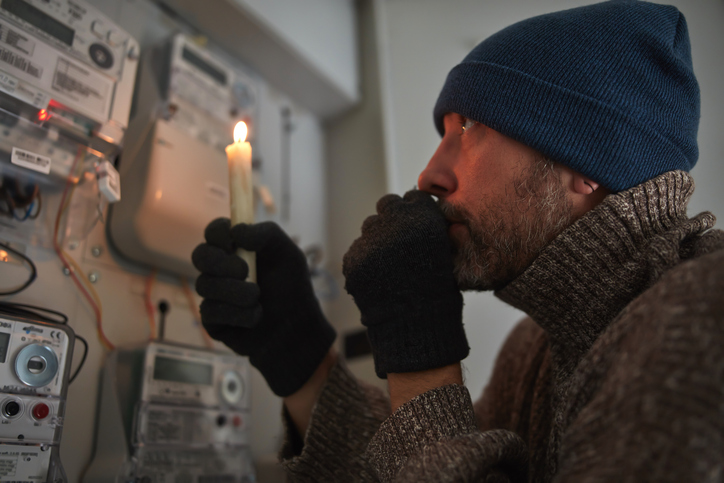
The grid is being overwhelmed. Across continents power outages are no longer rare shocks but creeping constants. Recent power outages in Europe, particularly in Spain, Portugal, France and parts of Belgium have caused massive disruption, affecting millions of people and every service that requires electrical power. The outages were attributed to cascading disconnections in the electrical grid, with investigations ongoing to determine the exact causes, although no evidence of a cyber-attack has been found (yet).
This article is based on deep research by Alexis AI at PreEmpt.Life. The full set of reports is available to download free-of-charge. just click on the link to access.
Why Power Outages Are Escalating, And What That Really Means
In recent years, the world has quietly crossed a threshold – and you may have missed it. Once relegated to developing economies or extreme weather events, widespread electrical power outages are now afflicting some of the most technologically advanced nations on Earth. The fragility of our grids is being exposed by climate volatility, cyber threats, surging AI energy demand and decades of underinvestment.
From Texas to Tokyo, power outages are no longer just inconveniences; they’re cascading failures that disrupt economies, public health, and geopolitical stability.
The evidence is stark:
In 2023, the average duration of outages in Europe doubled compared to pre-2020 levels.
India, Brazil, and South Africa all reported their worst blackout years on record.
In the US outage frequency has increased 64% since 2011, with an average of over 250 major events annually.
A Perfect Storm: What’s Driving the Surge in Blackouts?
- Climate Extremes
Wildfires. Floods. Hurricanes. Droughts.
Severe weather events now account for over 80% of large-scale outages globally.
California, once the symbol of innovation, saw over 39,000 gigawatt-hours of power demand curtailed in 2023 due to wildfire and heat-induced grid stress.
In Pakistan, a grid cascade in January 2023 left 220 million people without electricity overnight after a frequency imbalance triggered a country-wide trip.
Greece and Algeria suffered grid collapses during unprecedented summer heatwaves that pushed demand over maximum capacity for days.
The systems weren’t designed for this kind of pressure.
- AI and the Energy Crunch
We’re teaching machines to think—but starving the systems that keep them running.
The explosion in AI model training and data center growth is now visibly straining the world’s electricity infrastructure:
A single ChatGPT query consumes 10× more energy than a standard Google search.
Data centers already use 4% of total U.S. electricity—forecasted to hit 9% by 2030.
Google and Microsoft both reported significant increases in carbon emissions due to AI-driven infrastructure expansion.
In the UK, delays in grid connectivity for AI centers are pushing companies to deploy diesel and gas-powered backups, undermining climate targets.
And while Brazil is successfully attracting AI investment thanks to its 90% renewable grid, the question remains: Can clean power scale fast enough?
- Aging Infrastructure Meets Cyber Risk
Even in high-income nations, much of the electrical infrastructure is decades old. Substations, transmission lines, and transformers were built for 20th-century demands, not 21st-century volatility.
Layer on the new wave of state-sponsored cyberattacks, and the threat compounds.
In 2022, Costa Rica declared a national emergency after a ransomware attack disabled its Ministry of Energy and critical grid controls.
U.S. authorities report a 1,600% increase in cyber intrusions targeting energy infrastructure since 2020.
In Ukraine, Russian state-sponsored hackers have used malware to disable substations literally weaponizing the dark.
Infrastructure is only as strong as its weakest firewall.
- Political Gridlock and Regulatory Drag
Some countries suffer not from lack of tech, but from governance paralysis.
In Nigeria, legacy corruption and delayed tariff reforms have kept over 43% of citizens disconnected from stable power, despite abundant natural gas reserves.
South Africa’s Eskom, long mismanaged, now implements routine 8–10 hour rolling blackouts due to load shedding.
Germany’s Energiewende (energy transition) stumbled in 2023, with public pushback against new transmission line corridors and delays in retiring coal plants.
When energy becomes a political football, the lights go out for everyone.
The Human Cost: From Inconvenience to Crisis
We’re not just talking about Netflix buffering or fridges defrosting. In many parts of the world, outages are matters of life and death:
Hospitals in Myanmar and Sudan are unable to refrigerate vaccines or run neonatal ventilators during rolling blackouts.
Digital learning collapses in rural Indonesia and Central America whenever power goes down, deepening inequality.
In Detroit and Delhi, small businesses like barbershops, bakeries, and market vendors, lose entire day’s earnings with every unscheduled outage.
Energy is now the new literacy, without it upward mobility stalls.
Who’s Doing It Right? The Countries Building Future-Ready Grids
Some nations are reimagining their grids with remarkable success.
Finland
A trailblazer in grid digitization, Finland’s outage frequency is among the lowest in Europe. Smart meters, microgrids, and predictive maintenance AI now underpin its electrical system.
Rwanda
Despite modest GDP, Rwanda has nearly doubled rural electrification since 2017 by investing in off-grid solar micro-systems—making blackouts nearly obsolete in key regions.
Chile
Chile’s grid reform unlocked $25 billion in clean energy investment between 2018–2023, stabilizing supply and rapidly decarbonizing at the same time.
Resilience is no longer a luxury, it must become the standard across the entire world.
The Foresight Opportunity: From Reaction to Prevention
What if power outages were no longer surprises?
Decision intelligence platforms like PreEmpt.Life, are enabling public and private sector leaders to anticipate disruptions, rather than just react to them.
Using real-time data from satellites, climate models, IoT sensors and geopolitical signals, these tools help:
a) Model grid stress scenarios weeks in advance.
b) Predict outage impact on critical infrastructure (hospitals, supply chains, telecoms).
c) Inform investment timing for resilience upgrades.
d) Detect cyber vulnerabilities before attackers exploit them.
Smart cities aren’t built by smart tech alone. They’re built by foresight, anticipation and intelligent decisions.
What Happens Next?
The 2020s are shaping up to be the “Decade of Grid Reckoning.”
With AI workloads rising, weather extremes escalating and geopolitical shocks more frequent, there is no status quo to return to.
But this isn’t a doom spiral; it’s a decision point.
We must treat electricity not as a commodity, but as a critical lifeline and plan for its volatility with the same urgency as financial or pandemic threats.
Because when the lights go out, the future does too.
Let’s Stay Ahead of the Next Blackout
At PreEmpt.Life, we help governments, energy strategists, and AI-scale innovators see around corners, before blackouts become breakdowns. Explore our strategic foresight and horizon-scanning platform to build resilience into your decisions, power into your plans, and light into your long-term future.